Peer-reviewed publications build on more than three decades of research and highlight
student contributions
FRANKFORT, Ky. — A short shelf life, vulnerability to disease, and the difficulty of establishing
young trees have long constrained pawpaw’s commercial potential. Five new studies
by Kentucky State University researchers address those barriers and deepen the scientific
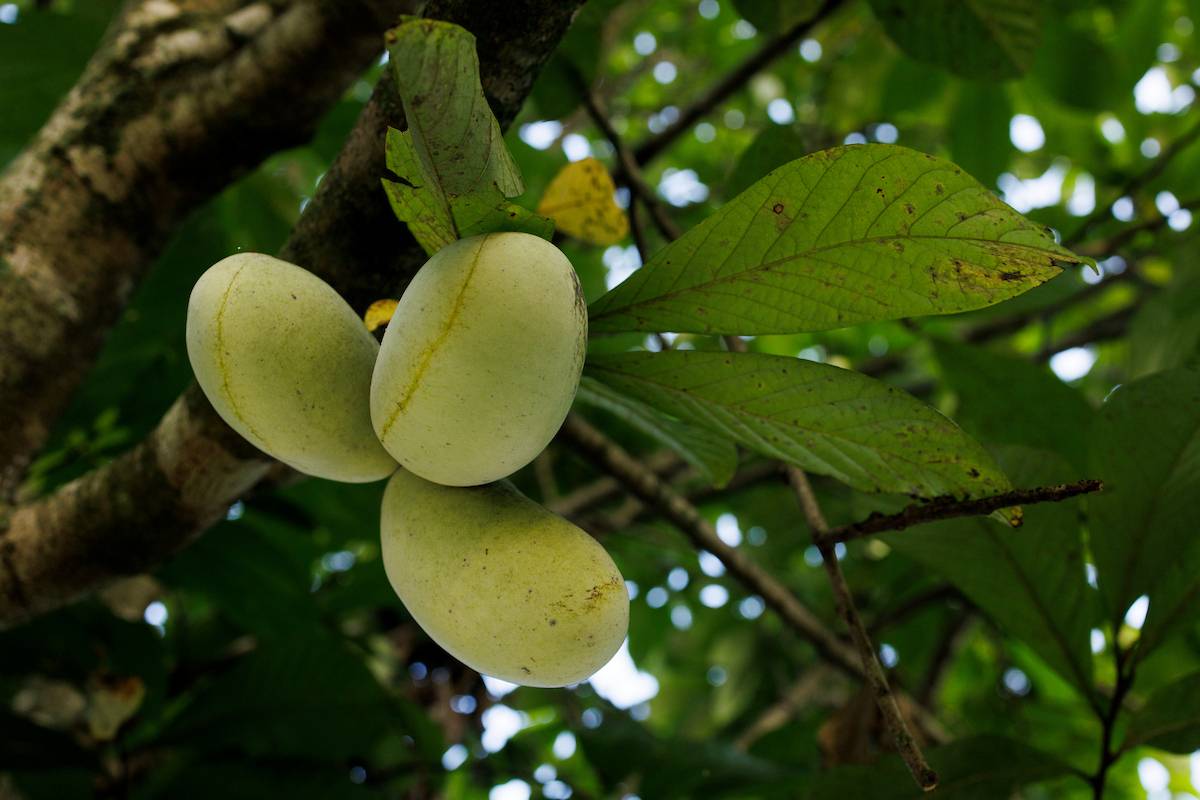
understanding of North America’s largest native fruit.
 Four of the newly published studies examine critical aspects of pawpaw production,
including flowering, disease management, postharvest storage, and seedling establishment.
A fifth evaluates the potential of luffa, bitter melon, and yard-long beans as specialty
crops for Kentucky growers.
Four of the newly published studies examine critical aspects of pawpaw production,
including flowering, disease management, postharvest storage, and seedling establishment.
A fifth evaluates the potential of luffa, bitter melon, and yard-long beans as specialty
crops for Kentucky growers.
The research builds on Kentucky State’s nationally recognized role in pawpaw conservation,
cultivation, and commercialization. The University began formal pawpaw research in
1990 and has maintained a U.S. Department of Agriculture satellite repository for
pawpaw since 1994. More than 2,000 trees representing plant material collected from
17 states grow across 12 acres at the Harold R. Benson Research and Demonstration
Farm in Frankfort.
The five peer-reviewed articles appear in Acta Horticulturae, the scientific and technical proceedings of the International Society for Horticultural
Science. Six current or former students in Kentucky State’s Master of Science in Environmental
Studies program contributed as primary or co-authors: Anju Chaudhary, Manisha Hamal,
Sijan Pandit, Kshitij Shahi, Subas Thapa Magar, and Jacob Vincent.
 “These studies show how Kentucky State transforms decades of specialized knowledge
into practical information that growers can use,” Dr. Kirk W. Pomper, professor of
horticulture, said. “Just as importantly, our students are contributing directly to
peer-reviewed research, gaining hands-on experience as scientists, and helping address
real production challenges that affect agriculture in Kentucky and beyond.”
“These studies show how Kentucky State transforms decades of specialized knowledge
into practical information that growers can use,” Dr. Kirk W. Pomper, professor of
horticulture, said. “Just as importantly, our students are contributing directly to
peer-reviewed research, gaining hands-on experience as scientists, and helping address
real production challenges that affect agriculture in Kentucky and beyond.”
Together, the pawpaw studies provide information that could help growers improve production and support the continued development of the fruit as a commercial crop. The specialty vegetable study offers Kentucky growers research-based guidance for assessing additional production and marketing opportunities.
The five published articles are:
-
- Chilling requirements for flowering of the North American pawpaw (Asimina triloba)
K.W. Pomper, A. Chaudhary, J. Vincent, J.D. Lowe, and S.B. Crabtree. Acta Horticulturae 1460:141–146. - Incidence of and control measures for pawpaw leaf and fruit spot complex in Asimina triloba
S.B. Crabtree, M. Hamal, S. Pandit, J.D. Lowe, and K.W. Pomper. Acta Horticulturae 1460:233–242. - Enhancing the shelf-life of pawpaw fruit at room temperature using modified atmosphere
and plastic packaging
K. Shahi, K.W. Pomper, J.D. Lowe, S.B. Crabtree, and B. Arnoldussen. Acta Horticulturae 1460:307–314. - Optimizing the survival and growth of pawpaw (Asimina triloba) seedlings in temperate climates
J.D. Lowe, J. Vincent, S.B. Crabtree, A. Chaudhary, K. Broberg, and K.W. Pomper. Acta Horticulturae 1460:147–152. - Evaluating the yield potential of luffa (Luffa aegyptiaca), bitter melon (Momordica charantia), and yard-long beans (Vigna unguiculata) for regional suitability in Kentucky
Subas Thapa Magar, K.W. Pomper, and Srijana Thapa Magar. Acta Horticulturae 1460:153–160.
- Chilling requirements for flowering of the North American pawpaw (Asimina triloba)
The International Society for Horticultural Science promotes horticultural research and education and facilitates cooperation among researchers, educators, and industry professionals around the world.
Work by Kentucky State’s Pawpaw and Horticulture Research Group advances the University’s mission as an 1890 land-grant institution by developing science-based information and new agricultural opportunities for farmers, students, and communities across the Commonwealth and beyond.