New Center of Excellence will prepare a restoration workforce while advancing economic revitalization and ecological recovery in Central Appalachia
FRANKFORT, Ky. — A new $2 million Appalachian Regional Commission POWER grant will expand Kentucky State University’s education, workforce training, and Cooperative Extension outreach in Eastern Kentucky. The four-year project will prepare residents, landowners, and community partners for opportunities tied to land restoration, ecological recovery, and economic revitalization.
Kentucky State will lead a new Center of Excellence focused on workforce preparation,
land restoration, and long-term economic recovery in Eastern Kentucky communities
with deep ties to the coal economy. Through the Center, participants will gain practical,
research-based training in restoration skills, land management, measuring restoration
outcomes, and other areas connected to emerging and existing job markets across Central
Appalachia.
Support from state and federal leaders helped strengthen the project application submitted
by Kentucky State, the Commonwealth’s only public HBCU and an 1890 land-grant university.
The project received letters of support from 12 state senators and representatives
and two U.S. representatives, reflecting shared recognition of the need for coordinated
investment in Eastern Kentucky’s workforce, land, and long-term economic future.
At Kentucky State, the award also reinforces the University’s growing research and
grant profile. The University’s Carnegie classification places it in the Research
Colleges and Universities category, and National Science Foundation HERD survey data
show Kentucky State has the Commonwealth’s third-largest university research portfolio,
behind only the University of Kentucky and the University of Louisville.
“This award reflects exactly how Kentucky State serves the Commonwealth through education, training, Extension, and applied research,” President Koffi C. Akakpo said. “Our faculty and staff are building partnerships, strengthening communities, and preparing students and residents for the future of work.”
 Leading the effort is Dr. Buddhi Gyawali, professor in Kentucky State’s School of
Agriculture and Natural Resources, which is part of the College of Agriculture, Health,
and Natural Resources. His work has included more than a decade of engagement with
communities in Martin and Pike counties.
Leading the effort is Dr. Buddhi Gyawali, professor in Kentucky State’s School of
Agriculture and Natural Resources, which is part of the College of Agriculture, Health,
and Natural Resources. His work has included more than a decade of engagement with
communities in Martin and Pike counties.
“This grant will be instrumental in expanding Kentucky State University’s education, Extension, and workforce training in Eastern Kentucky,” said Dr. Gyawali. “Through this Center of Excellence, we will help prepare a 21st-century workforce while supporting economic revitalization and ecological recovery in communities across the region.”
Kentucky State will lead the project in collaboration with Virginia Tech, the University of Tennessee, Knoxville, and Tennessee State University. Together, the institutions will address the need for landscape-scale restoration skills through virtual instruction, hands-on field training, and community-based learning designed for practitioners, stakeholders, landowners, and local partners.
Renew Appalachia will also serve as a key project partner by providing land in Martin County for on-site restoration trainings and outreach. The site will give participants direct experience with restoration practices while supporting the Center’s broader goal of connecting classroom learning, field application, and community benefit.
“Millions of acres across Appalachia have been disturbed by surface mining, and much
of this land sits idle with impaired ecosystem function,” said Clifford Smith, founder
and managing director of Renew Appalachia. “Surrounding communities currently derive
limited benefit from these sites.
This project will be important to unleashing the agricultural potential of reclaimed
mine lands. It will provide critical capacity building to allow communities to implement
agricultural practices that also improve ecosystem performance, providing a key to
uplift long-struggling communities in Appalachia.”
Plans call for 13 training programs aligned with state, regional, and Appalachian Regional Commission economic development priorities. Those programs are expected to train approximately 1,000 local stakeholders while helping communities develop skills in restoration planning, land management, measuring restoration outcomes, and market-based approaches to restoring working landscapes in Eastern Kentucky.
Ten additional Kentucky State faculty and staff co-principal investigators will help support training, outreach, and implementation across the project. Their participation will extend the Center’s capacity to deliver education and hands-on learning across multiple areas of expertise.
ARC’s POWER Initiative, formally the Partnerships for Opportunity and Workforce and Economic Revitalization Initiative, supports projects that help Appalachian communities affected by changes in the coal economy create jobs, attract investment, and build long-term economic resilience. Kentucky State’s project connects that regional priority with the University’s strengths in land restoration, natural resource management, workforce training, and Extension outreach.
Dr. Marcus Bernard, dean of the College of Agriculture, Health, and Natural Resources and director of Kentucky State’s 1890 Land-Grant Program, said the award demonstrates the value of land-grant service that begins with community needs.
“Eastern Kentucky communities have deep knowledge of their land, their history, and their economic future,” said Dr. Bernard. “Kentucky State’s role is to bring training, Extension expertise, and land-grant partnerships to support local leadership and long-term opportunity.”
Serving as co-project director is Dr. Suraj Upadhaya, assistant professor of sustainable systems in the School of Agriculture and Natural Resources. Together, Dr. Gyawali, Dr. Upadhaya, and the broader Kentucky State project team will help guide a Center focused on practical training, community outreach, and workforce development.
Appalachian Regional Commission project number PW-22890 will move into implementation in the coming months. Additional information about training opportunities and launch activities will be announced soon.
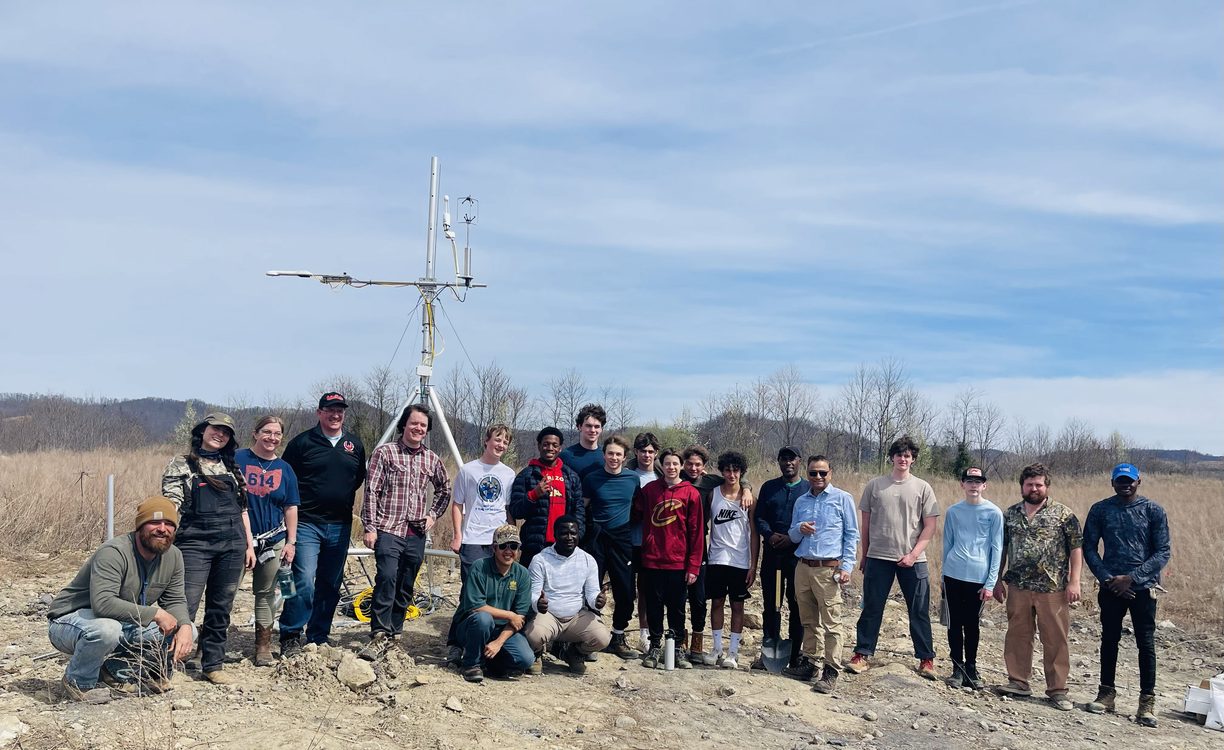
First Image: High school students visit the restoration site as team members explain an eddy covariance system used to monitor site conditions.
Second Image: Team members collect soil samples at the restoration site.
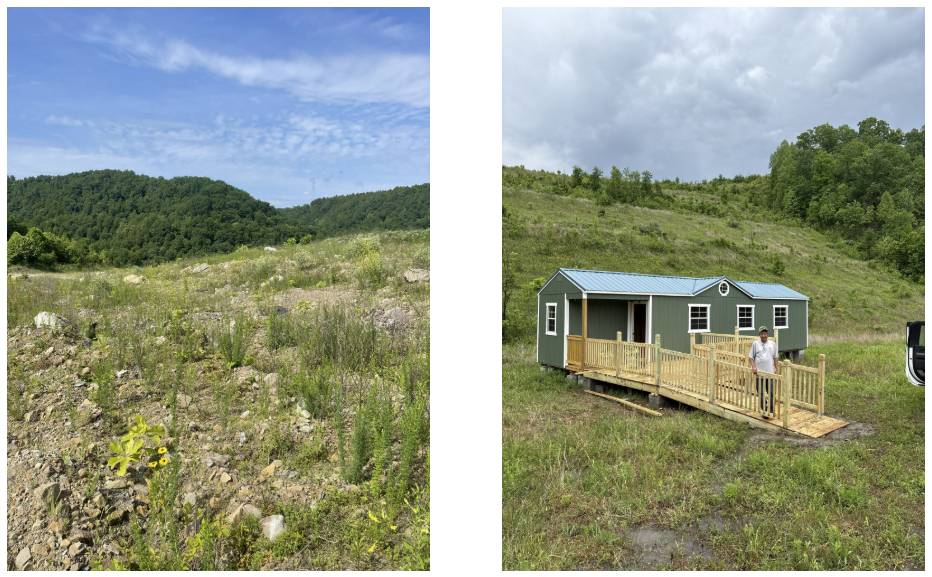
Third Image: Land targeted for restoration through the project.
Fourth Image: Ecosystems Restoration Learning Center.