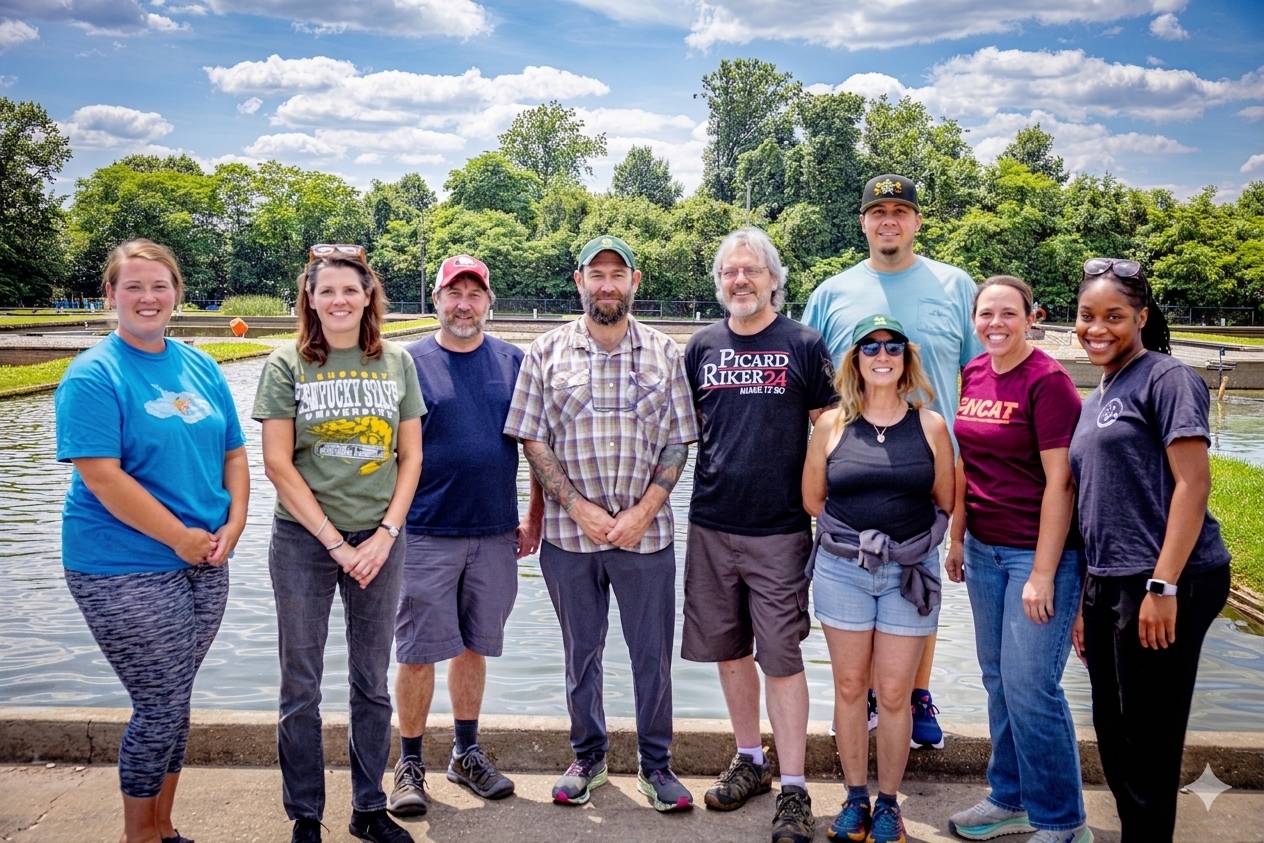
Three-day boot camp at Aquatic Research Center highlighted aquaponics, applied agriculture,
and veteran outreach
FRANKFORT, Ky. — Six veterans who provide agricultural education and outreach across
the United States recently came to Kentucky State University for a three-day Aquaponics
Train-the-Trainer Boot Camp designed to deepen their technical skills and help them
carry aquaponics education back to their communities.
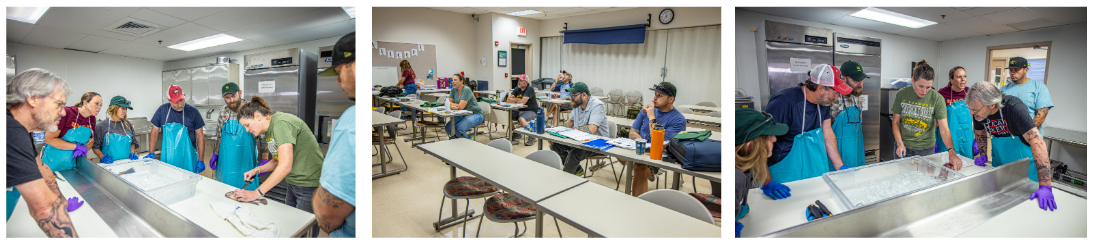
Hosted by Kentucky State aquaponics experts at the Aquatic Research Center, the training blended classroom instruction with hands-on learning, giving participants a comprehensive look at aquaponics system design, management, economics, and outreach.
 Aquaponics combines aquatic animal production with plant production in a recirculating
system. Fish waste provides nutrients for plants, while plants and related filtration
help clean water that can be reused in the system. For beginning producers, educators,
and community partners, the model offers a practical way to connect water quality,
food production, biological systems, and agricultural entrepreneurship.
Aquaponics combines aquatic animal production with plant production in a recirculating
system. Fish waste provides nutrients for plants, while plants and related filtration
help clean water that can be reused in the system. For beginning producers, educators,
and community partners, the model offers a practical way to connect water quality,
food production, biological systems, and agricultural entrepreneurship.
Over three days, participants studied topics central to successful system operation,
including system design, water quality management, fish health and disease prevention,
species selection, fish processing, budgeting, financial planning, marketing, and
best management practices.
Classroom sessions emphasized both the biological and business sides of aquaponics,
reinforcing that successful production depends on understanding how fish, plants,
water, equipment, labor, and markets work together.
Hands-on sessions moved that instruction into practice. Participants built a media-based
aquaponics system using an intermediate bulk container, or IBC tote, working together
on layout, plumbing, component installation, and operational planning.
The project gave participants direct experience with system construction while also
helping them think through the decisions and troubleshooting skills needed to teach
aquaponics in other settings.
“This was very beneficial and eye-opening,” one veteran participant said. “The system
design was great and helped me foster understanding of whole-system thinking. Great
work.”
That concept was central to the boot camp. Rather than treating aquaponics as a collection
of separate tasks, participants examined how water quality, fish health, plant growth,
system design, labor, finances, and markets all affect one another.
The Aquatic Research Center (ARC) is the teaching and research facility for Kentucky State’s School of Aquaculture
and Aquatic Science, the University’s Program of Distinction and one of three schools
within the College of Agriculture, Health, and Natural Resources. As an 1890 land-grant
university, Kentucky State connects academic, research, and Extension expertise to
practical education that serves producers, educators, and communities.
Kentucky’s only dedicated aquatic research complex, the ARC includes 33 research ponds,
a 3,000-square-foot hatchery that supports spawning, holding, and experimental tank
work, and a 3,500-square-foot nutrition laboratory with wet-lab space for aquarium
studies.