First annual event at Benson Farm highlighted soilless agriculture research and pathways
from student training to commercialization.
FRANKFORT, Ky. — A $7 million research initiative led by Kentucky State University
is well on its way to developing a much-needed statewide agtech network.
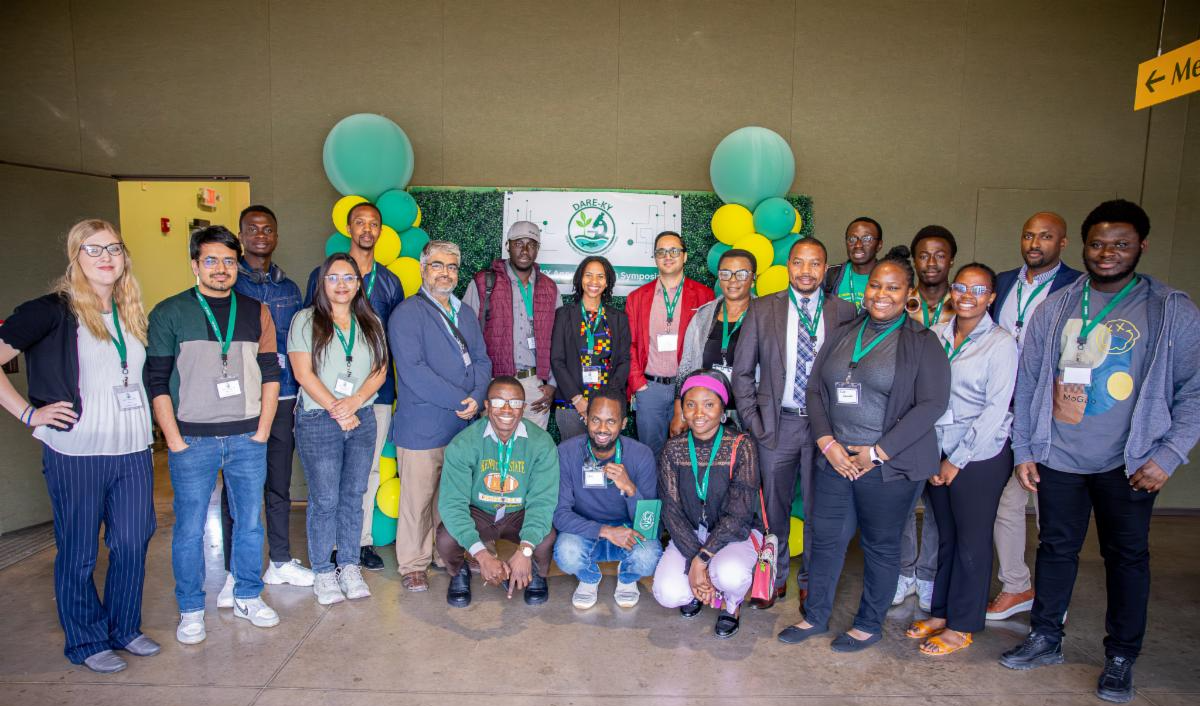
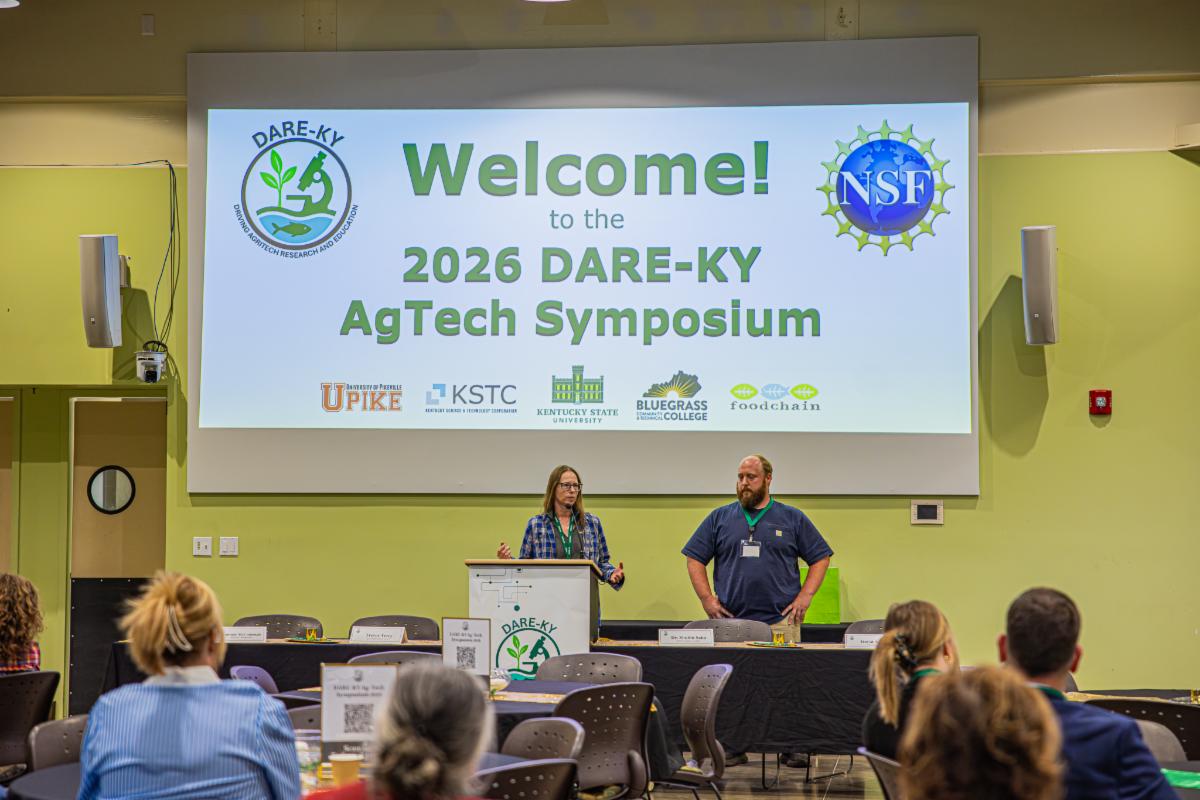
That progress was on display April 21, when the first DARE-KY AgTech Symposium brought
researchers, students, educators, public-sector partners, community collaborators,
colleagues from several colleges and universities, and agtech companies together at
the University’s Harold R. Benson Research and Demonstration Farm in Frankfort.
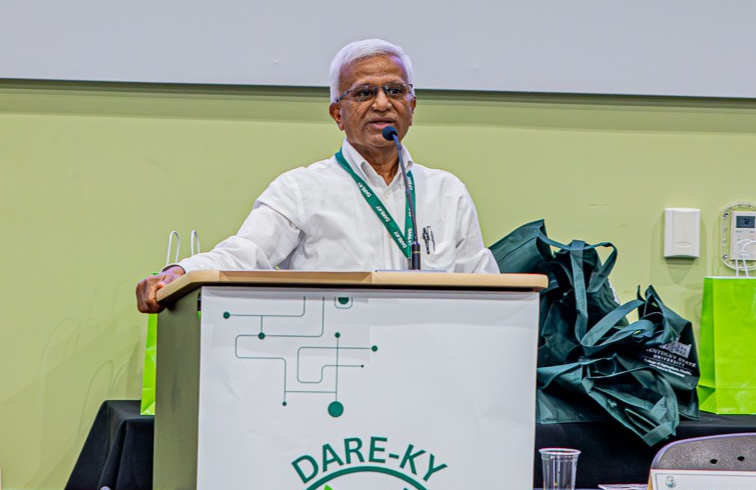 “This symposium showed what DARE-KY was created to do,” said Dr. Avinash Tope, principal
investigator for DARE-KY and associate dean and associate professor of human nutrition
and food safety at Kentucky State. “It brought people from across the agtech ecosystem
into the same conversation and showed how Kentucky State is building capacity for
Kentucky to lead.”
“This symposium showed what DARE-KY was created to do,” said Dr. Avinash Tope, principal
investigator for DARE-KY and associate dean and associate professor of human nutrition
and food safety at Kentucky State. “It brought people from across the agtech ecosystem
into the same conversation and showed how Kentucky State is building capacity for
Kentucky to lead.”
DARE-KY, or Driving AgTech Research and Education in Kentucky, is supported by the
largest National Science Foundation grant in Kentucky State history. The initiative
is designed to strengthen research, education, and workforce development around soilless
food systems, including hydroponics and aquaponics, while connecting partners across
the Commonwealth around applied agricultural innovation.
The event marked a shift from planning into implementation. Across the DARE-KY network,
partners are developing research incubators, building new facilities, expanding coursework,
creating student research opportunities, and strengthening connections between academic
discovery and agricultural practice.
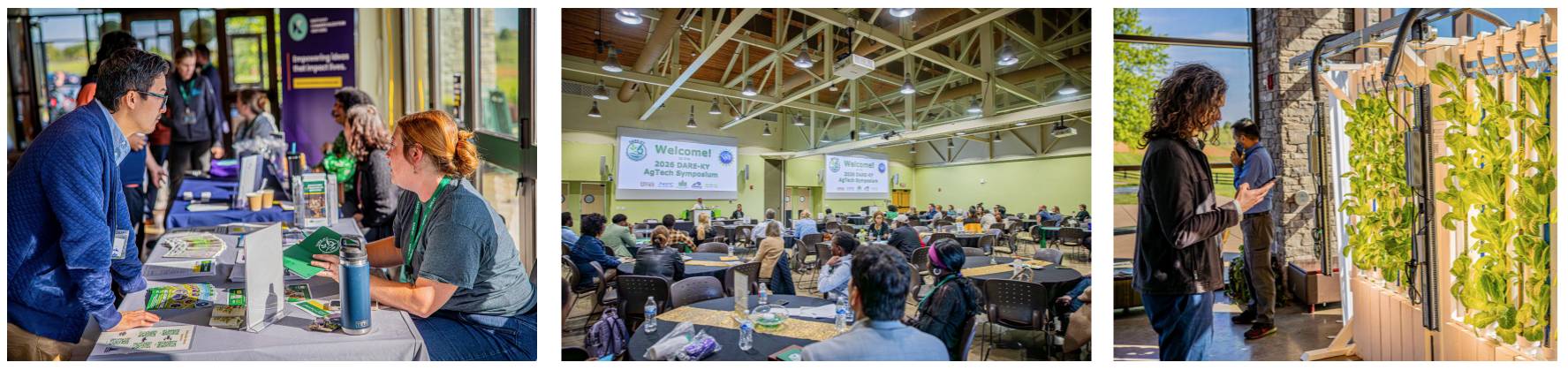
At Kentucky State, that work is being anchored by new research infrastructure. The
University’s Center for Agriculture Research, Education, and Technology is scheduled
for completion in May and will include a two-bay aquaponics and hydroponics greenhouse,
with one bay supporting research and the other supporting demonstration.
Kentucky State researchers also shared updates on work centered around nutrient use
and waste recovery in aquaponic and hydroponic systems. One research focus is mineralization,
a process in which microbes break down fish waste and release nutrients that can be
used by plants. Early findings presented by the Kentucky State DARE-KY team showed
that mineralized waste can increase nutrients available to plants and support higher
plant production in aquaponic systems.
The research speaks directly to one of the practical challenges in aquaponics: how
to better recover and reuse nutrients that otherwise remain bound in fish waste. Kentucky
State researchers are studying not only whether those nutrients can be recovered,
but also how plants use them, which microorganisms drive the process, and how those
insights can help producers improve system performance.
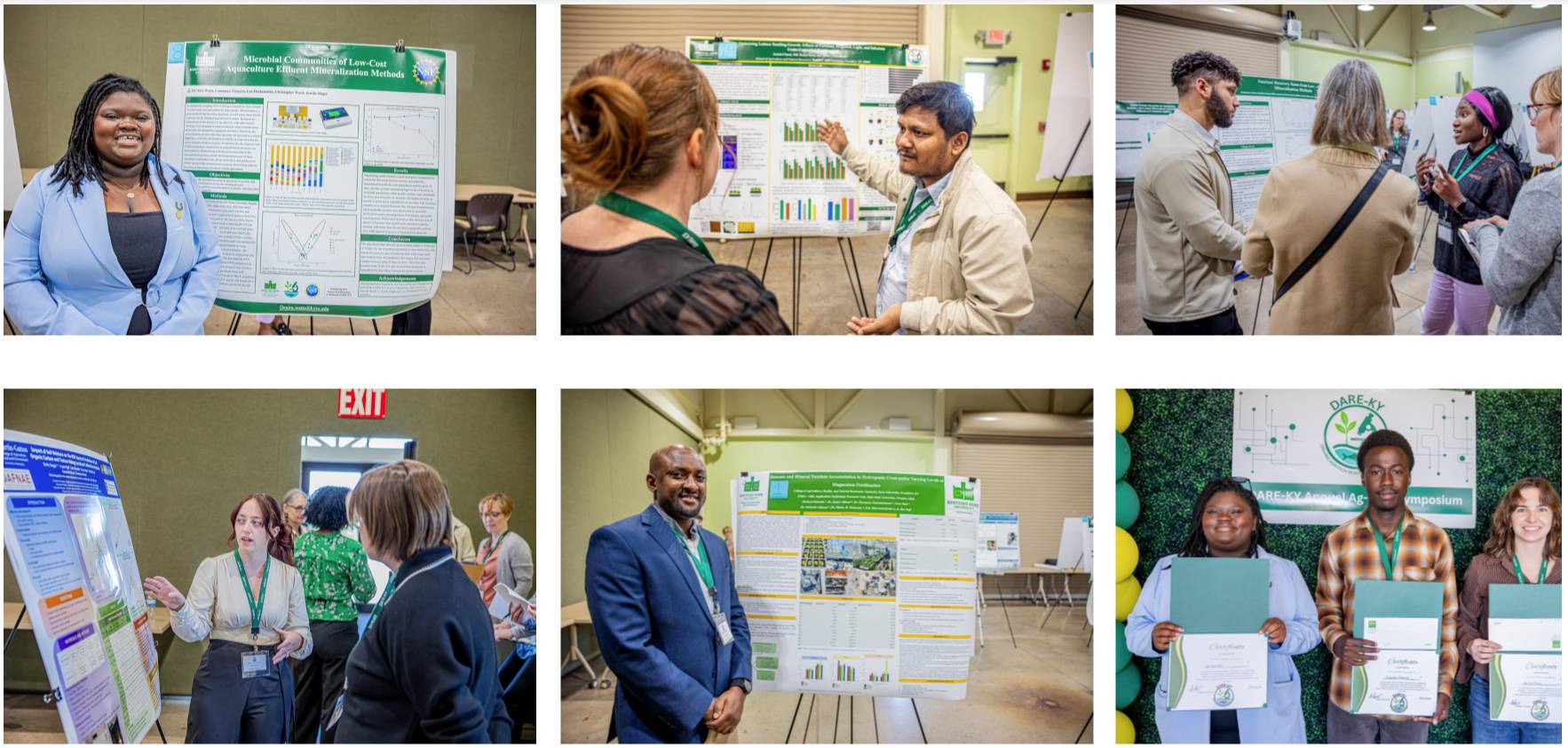
Student research was also featured through an AgTech poster competition showcasing
work from institutions across Kentucky, including Kentucky State, the University of
Kentucky, the University of Pikeville, and FoodChain. Fifteen students presented their
research to an independent panel of judges representing the Kentucky Science and Engineering
Foundation, Kentucky Commercialization Ventures, and DARE-KY advisory board members.
Poster winners received cash awards sponsored by the Kentucky Aquaculture Association.
Annika Maxey of FoodChain earned first place for research on the use of vertical aquaponics
to promote food literacy. Kentucky State undergraduate student DeAira Watts earned
second place for DARE-KY research on microbial dynamics in aquaponic mineralization.
Kentucky State graduate student Kwabena Sarpong earned third place for research on
the influence of selenium fertilization on plant chlorophyll levels.
Other student poster topics reflected the breadth of agtech research underway across
the Commonwealth, including hydroponic production trials, GIS modeling, edible coatings,
and precision agriculture.
The symposium also featured a keynote presentation by Jacob Ball, executive director
of Bluegrass AgTech Development Corp., titled “From Classroom to Commercialization:
How AgTech Is Rewriting Kentucky’s Agricultural Story.” Ball’s remarks connected student
curiosity, classroom-based growing systems, controlled environment agriculture, entrepreneurship,
and Kentucky’s broader agtech economy.
His presentation emphasized that the challenge is not only introducing students to
agriculture, but also creating entry points that help them see where they fit. Ball
connected student research and poster presentations to potential commercialization
pathways, including innovation awards, early market traction, and future funding opportunities
for agtech companies.
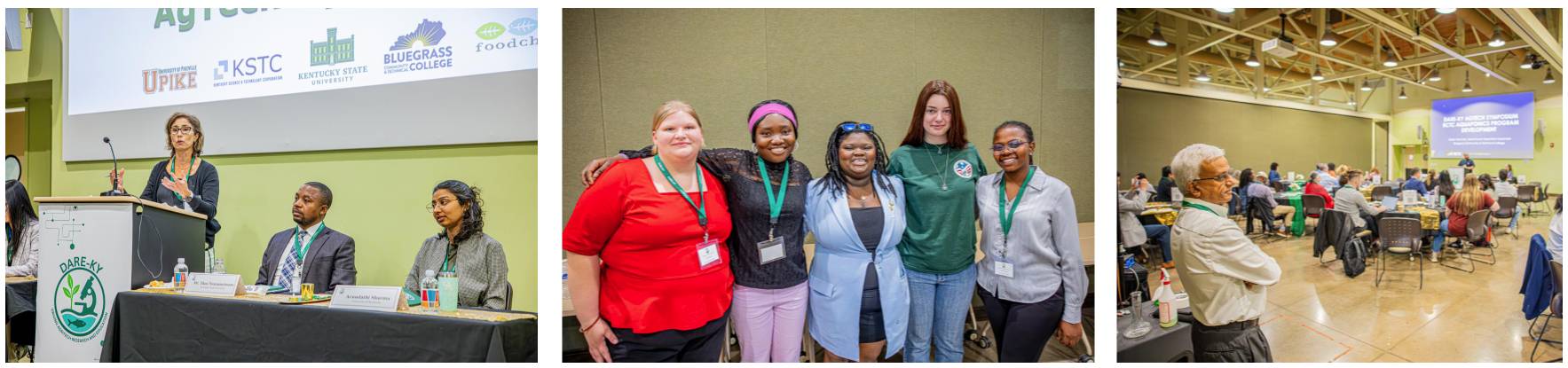
Student learning was central throughout the symposium. The agenda included a student
poster competition, panel discussion, partner updates, and recognition of work underway
across the DARE-KY network. Through the initiative, students are gaining experience
in plant and fish husbandry, water-quality testing, molecular laboratory work, sequencing,
bioinformatics, statistical analysis, system design, and research presentation.
DARE-KY has engaged more than 100 students in research and training across partner
institutions, including 69 paid positions. The initiative also has supported student
presentations at conferences, delivered K-12 curriculum modules to students across
central Kentucky schools, and advanced development of Kentucky’s first registered
apprenticeship program focused on soilless agriculture.
That workforce focus extends beyond Kentucky State. Bluegrass Community and Technical
College shared updates on its Leestown campus aquaponics program, which is being developed
through DARE-KY as a hands-on training, workforce development, and student research
system. The BCTC effort includes greenhouse infrastructure, aquaponics equipment,
course planning, and potential transfer pathways with Kentucky State.
FoodChain, a Lexington-based DARE-KY partner, highlighted its role as a research incubator
supporting deep-water culture aquaponics, sustainable urban food production, internships,
K-12 learning modules, and water-quality testing. Its work connects research with
community-based food access and experiential learning opportunities for students at
multiple levels.
Together, the partner presentations showed how DARE-KY is becoming more than a single
research project. It is developing into a statewide network connecting Kentucky State,
BCTC, the University of Pikeville, FoodChain, Kentucky Science and Technology Corporation,
Bellarmine University, industry partners, and other collaborators around shared questions
in food production, sustainability, workforce development, and applied research.
A pre-symposium grant-writing workshop on April 20 also gave undergraduate and graduate
students an opportunity to develop research proposals connected to agricultural technology.
Selected student proposals may receive up to $5,000 to support implementation of their
research ideas.
For Kentucky State, the symposium underscored the University’s land-grant mission
in action: bringing research to practical challenges, expanding hands-on learning,
building partnerships, and preparing students for emerging careers connected to food,
water, sustainability, and technology.
As DARE-KY continues to grow, the work at Kentucky State is helping position the University
not only as a hub for soilless agriculture research, but also as a place where students,
partners, and producers can help shape what comes next for agriculture in the Commonwealth.