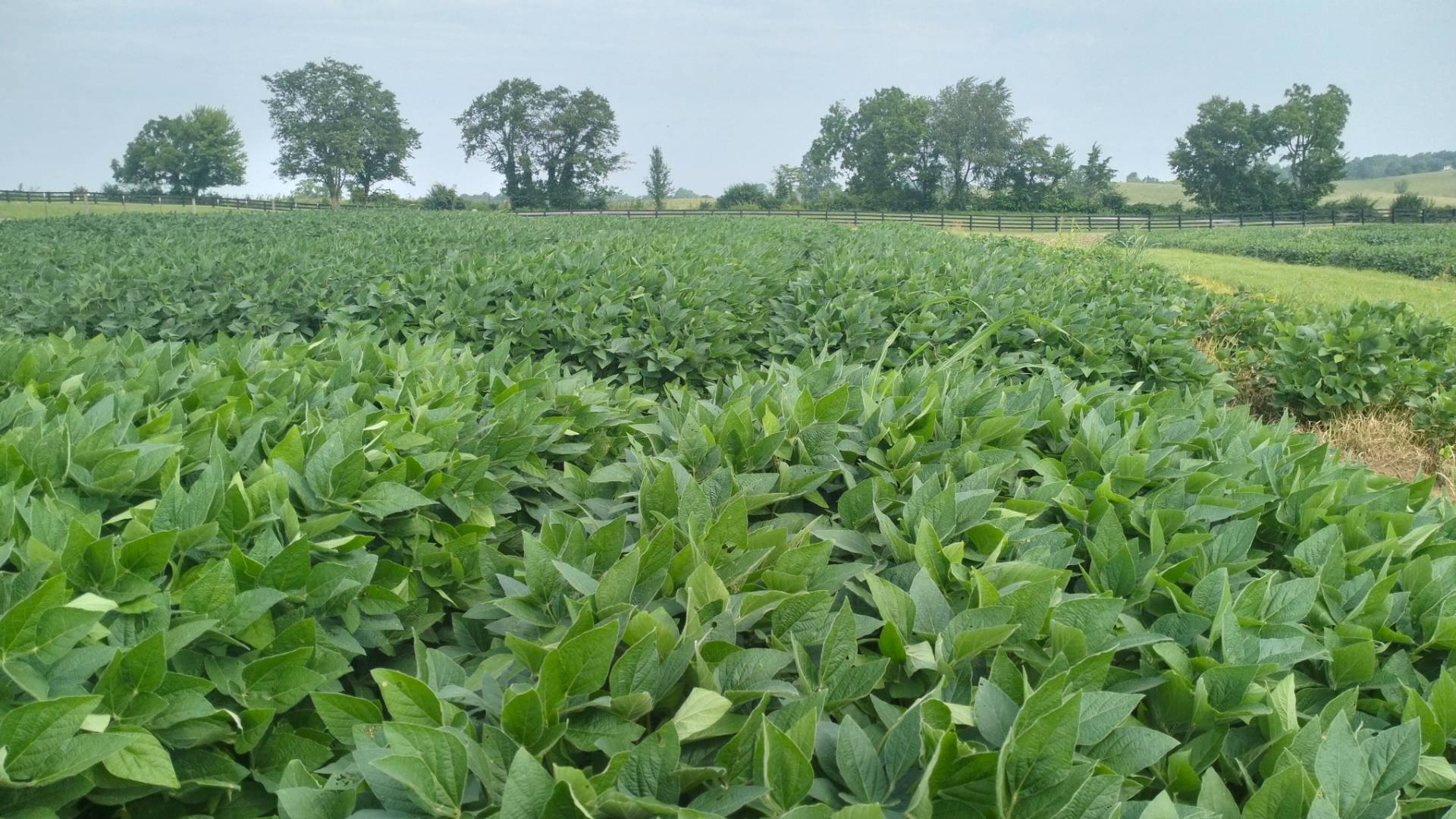
Study led by Research Associate Deepak Khatri examines amino acid and fatty acid composition in soybean seeds
FRANKFORT, Ky. — Soybean research at Kentucky State University is offering new insight into how producers may be able to improve seed protein concentration without sacrificing important measures of protein and oil quality.
Deepak Khatri, a former Research Associate in Kentucky State’s Agronomy Lab, led the
peer-reviewed paper, “Can biochar and late-season nitrogen fertilization overcome
the sulfur-containing amino acid deficiency and improve oil stability in soybean seeds?”
published in Frontiers in Plant Science. Dr. Anuj Chiluwal, principal investigator
of the agronomy lab and assistant professor of agronomy, served as corresponding author.
Lab members Sudip Poudel, Manish Pandit, and former lab member Lalit Pun Magar are
co-authors.
The study builds on Khatri’s earlier research, published in the Journal of Agriculture and Food Research, which found that late-season nitrogen fertilization can increase soybean seed protein
concentration. The new paper examines whether increasing protein quantity affects
the nutritional and industrial quality of soybean seeds.
“We already knew from our earlier study that late-season nitrogen can boost protein
concentration,” Khatri said. “The next question was whether this increase comes with
any trade-offs in protein or oil quality. That is exactly what we set out to investigate.”
 Khatri began working with Kentucky State’s Agronomy Lab in fall 2023 as a graduate
student in the Master of Science in Environmental Studies program. He graduated with
the Class of 2025 and then worked as a research associate on agronomic management
practices in field crops, including nutrient application, planting dates, biochar,
and the use of drone-based aerial imagery to study crop growth and development. He
will join Kansas State University in Fall 2026 to begin a Ph.D. program in Agronomy.
Khatri began working with Kentucky State’s Agronomy Lab in fall 2023 as a graduate
student in the Master of Science in Environmental Studies program. He graduated with
the Class of 2025 and then worked as a research associate on agronomic management
practices in field crops, including nutrient application, planting dates, biochar,
and the use of drone-based aerial imagery to study crop growth and development. He
will join Kansas State University in Fall 2026 to begin a Ph.D. program in Agronomy.
The work aligns with the Agronomy Lab’s broader mission to enhance crop productivity,
profitability, and sustainability while improving grain quality and end-use products.
The lab’s current work includes research on soybean seed protein concentration, late-season
nitrogen fertilization, planting dates, plant spacing, biochar, seed growth and composition
dynamics, and drone-based aerial phenotyping.
Soybean meal is widely valued as a protein source in animal feed, but protein concentration
alone does not determine feed quality. Amino acid composition plays a major role in
the nutritional value of soybean meal, while fatty acid composition influences soybean
oil stability and shelf life.
Using a two-year field experiment at Kentucky State University’s Harold R. Benson Research and Demonstration Farm, the team analyzed 10 essential amino acids and five major fatty acids in soybean seeds. Researchers found that nitrogen application at 80 kilograms per hectare increased concentrations of seven of the 10 essential amino acids. The treatment also increased oleic acid concentration by approximately 5%, a finding connected to improved oil stability.
However, sulfur-containing amino acids, including methionine and cysteine, were not improved by nitrogen application. Researchers noted that additional strategies will be needed to enhance those amino acids in soybean seeds.
“The key takeaway is that late-season nitrogen fertilization can improve protein concentration without negatively impacting protein or oil quality,” Dr. Chiluwal said. “This gives producers confidence that adopting this practice will not compromise the nutritional or industrial value of their soybean crop.”
The research reflects Kentucky State’s continued work to advance crop science, sustainable production practices, and applied agricultural research that supports producers across the Commonwealth and beyond.
Learn more about Kentucky State University’s Agronomy Lab.
The full paper is available at https://doi.org/10.3389/fpls.2026.1849670.
Support for this study was provided by the USDA-NIFA 1890 Capacity Building Grant, award no. 2023-38821-39960.