"Tomorrow’s Catch" series highlights inland innovations for U.S. seafood security
FRANKFORT, Ky. — Kentucky State University’s School of Aquaculture and Aquatic Science
(SAAS) is featured in a new short film on indoor shrimp farming that shows how sustainable
seafood can be produced far from the coast.
“In a state better known for bluegrass than brine,” the feature notes, “researchers
at Kentucky State University are proving that sustainable seafood can be farmed far
from the coast.”
The film profiles SAAS research led by Dr. Andrew Ray, chair and associate professor,
and underscores both the challenge and opportunity presented by shrimp as the most
consumed seafood in the United States. It also notes that up to 90% of shrimp is imported.
“We can bring the ocean to you, wherever you are,” Ray said in the film.
At Kentucky State, this research and hands-on education is advanced through Kentucky’s
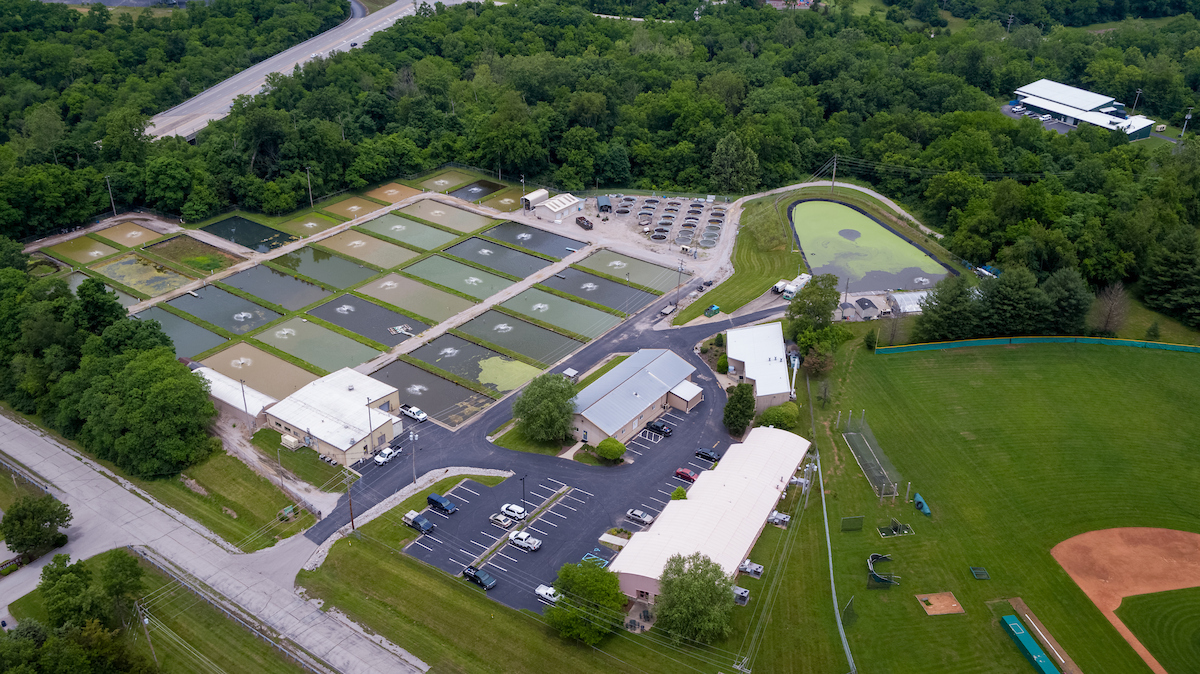
only dedicated aquatic science research complex, the Aquatic Research Center (ARC).
The ARC supports instruction and applied research across outdoor ponds and controlled-environment
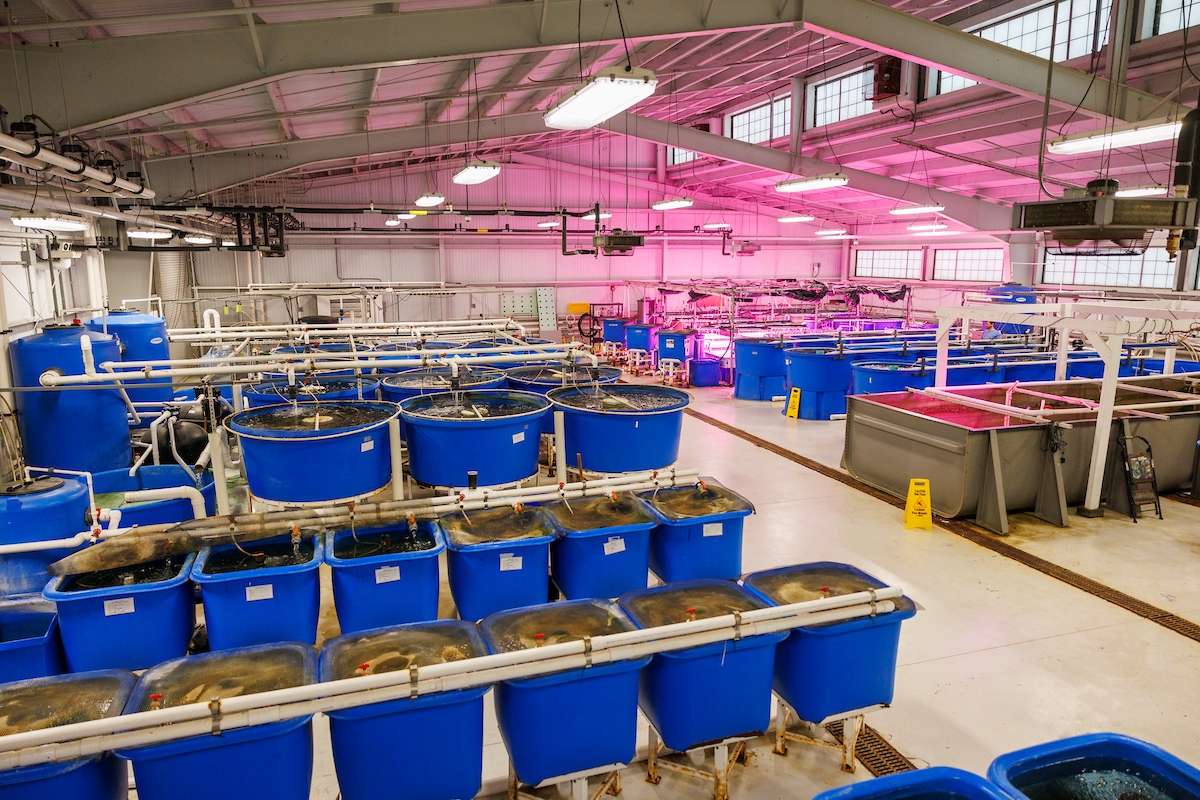
facilities, enabling year-round work in production systems, nutrition, water quality,
genetics, and fish health.
ARC capabilities include:
- 33 research ponds (24 at 0.1 acre; nine at 0.05 acre)
- A 3,000-square-foot hatchery for spawning, holding, and experimental tanks
- A 3,500-square-foot nutrition laboratory with a wet lab for aquarium studies
- A classroom and multipurpose building completed in 2005 supporting instruction, library resources, and distance learning, and housing the Fish Disease Diagnostic Laboratory with incubators, microscopes, and video microscopy
- The 14,400-square-foot Aquatic Production Technologies Laboratory, opened in 2012, supporting closed-system, controlled-environment production research—featuring intensive recirculating systems, a water-quality lab, and a state-of-the-art genetics lab used for student research and teaching
- A 4,000-square-foot office and laboratory building with a genomics lab, offices, and conference and classroom space
Current species under investigation at ARC include largemouth bass, channel catfish,
hybrid striped bass, tilapia, koi, paddlefish, freshwater prawns, Australian redclaw
crayfish, saltwater shrimp, flounder, and freshwater mussels.
The film appears as part of "Tomorrow’s Catch: Securing our Future Fisheries," a digital
series published by Content With Purpose that explores fisheries science and best-practice
aquaculture, alongside other approaches aimed at strengthening ecosystems and food
systems. The series also features perspectives from the American Fisheries Society.
Watch the video at:
https://contentwithpurpose.co.uk/afs/tomorrowscatch/series_partners/kentucky-state-university-school-of-aquaculture-and-aquatic-science-saas/
Kentucky State’s School of Aquaculture and Aquatic Science offers a Master of Science
degree in Aquaculture and Aquatic Science, an undergraduate minor in aquaculture,
an option in Aquaculture Systems, and a certificate program in Aquaculture and Aquatic
Science. Learn more at: kysu.edu/aqua.