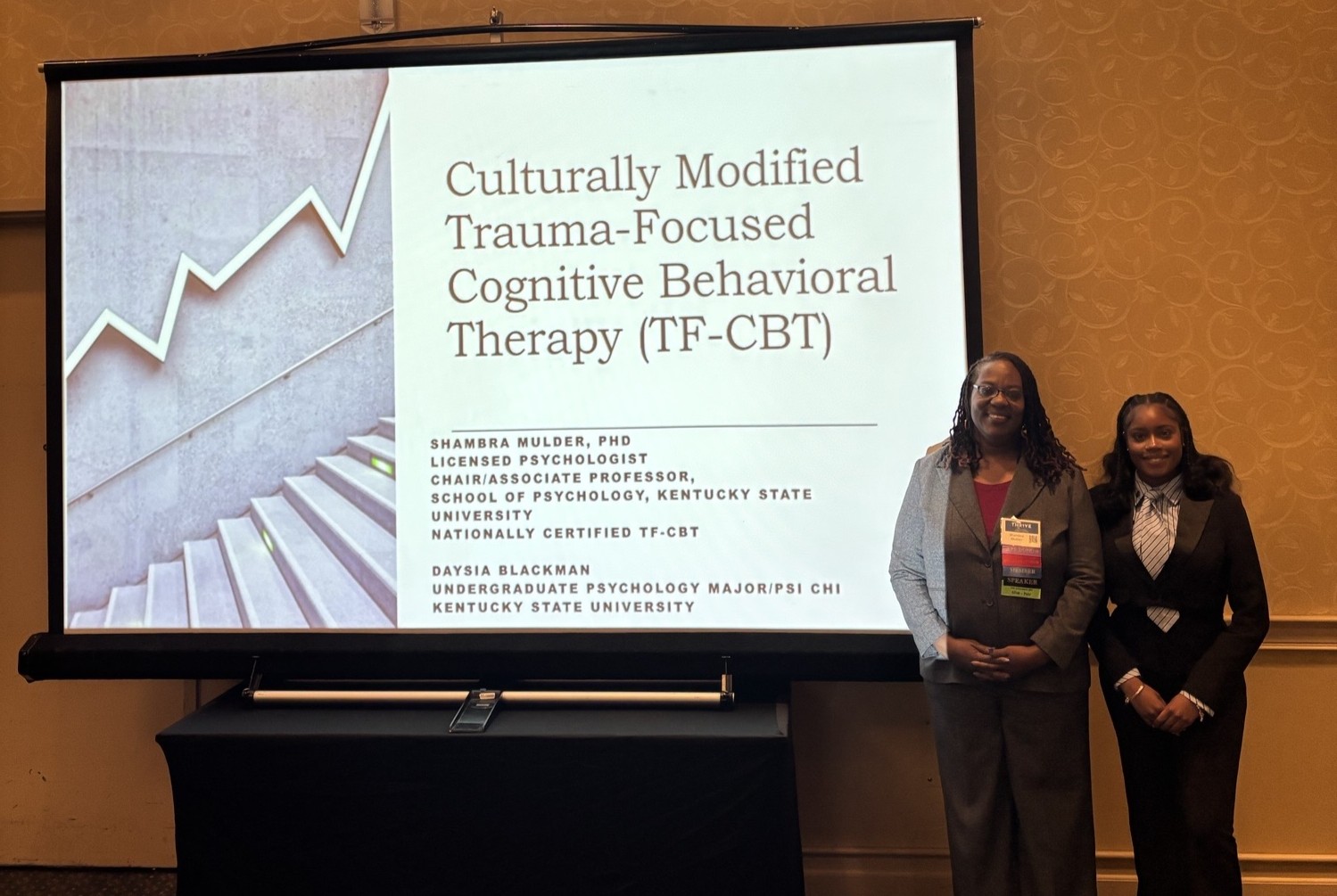
FRANKFORT, Ky. — Daysia Blackman, a Kentucky State University psychology undergraduate
student and an executive board member of Psi Chi, the International Honor Society
in Psychology, co-presented with Dr. Shambra Mulder, chair of Kentucky State’s School
of Psychology and an associate professor, at the 2025 Kentucky Psychological Association
(KPA) Annual Convention in Lexington, Kentucky, on November 13, 2025.
The appearance reflected the University's emphasis on pairing academic preparation
with professional engagement, providing students opportunities to contribute in statewide
professional development settings alongside faculty leaders.
Their session, titled “Culturally Modified Trauma-Focused Cognitive Behavioral Therapy
(TF-CBT),” drew on research and culturally relevant case studies providing trauma-focused
care to youth. It addressed clinical decision-making in TF-CBT for youth who have
experienced trauma, including considerations that can affect engagement and treatment
planning across patient backgrounds and lived experiences.
Approximately 100 licensed psychologists attended the session, giving Blackman a rare
opportunity for an undergraduate to contribute to a statewide continuing-education
forum.
KPA convened the annual convention Nov. 13–15, 2025, at the Hyatt Regency Lexington
in Lexington, Kentucky. In its convention welcome message, KPA described the 2025
theme, “Together we Thrive,” as a call to create connection, celebrate the work of
psychologists, and advance professional practice through a fully in-person program
centered on collegial exchange and professional development.
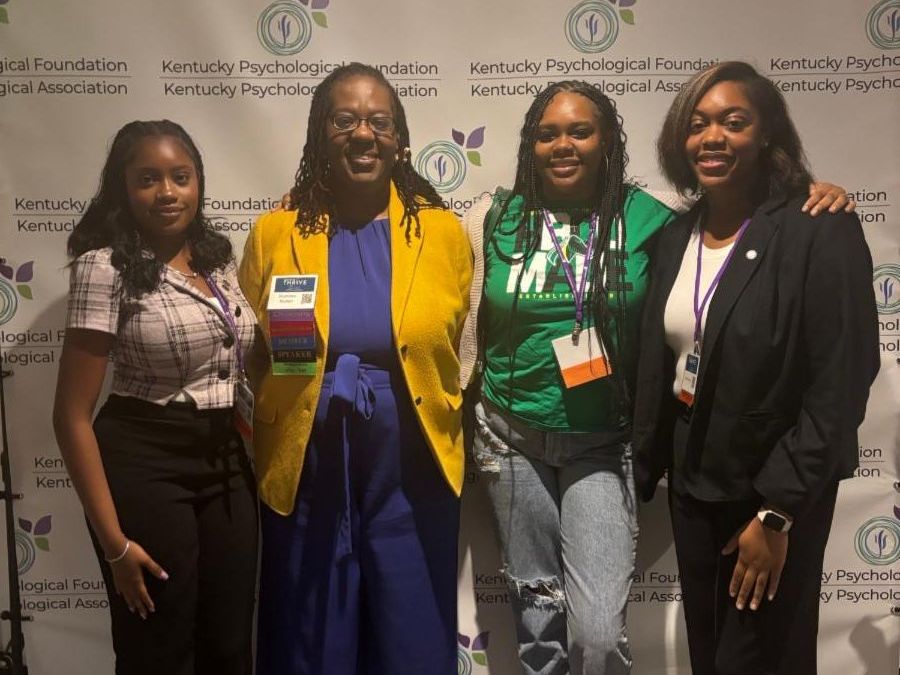
Blackman attended the convention with fellow Psi Chi executive board members Ariel
King and RaShaun Stephens-Bridgewater, along with other Kentucky State psychology
undergraduate majors and Psi Chi leaders who volunteered and participated in networking
activities with psychologists from across the Commonwealth.
Dr. Mulder leads Kentucky State’s School of Psychology, which emphasizes psychology
as a scientific discipline focused on understanding behavior and experience, and applying
evidence-based knowledge and critical thinking to help assess and address individual
and social problems. Academic pathways in the School include a Bachelor of Science
in Psychology; two Master of Arts options in Psychology, with concentrations in Forensic
Science (online option) and Forensic Counseling (the residential licensure option);
minors in Psychology and Sociology; and an undergraduate certificate in Social Issues
and Human Relations.