Since 2012, Kentucky State has invested $5.06 million;
KADF adds $1.4 million for education, training, and mini-grants
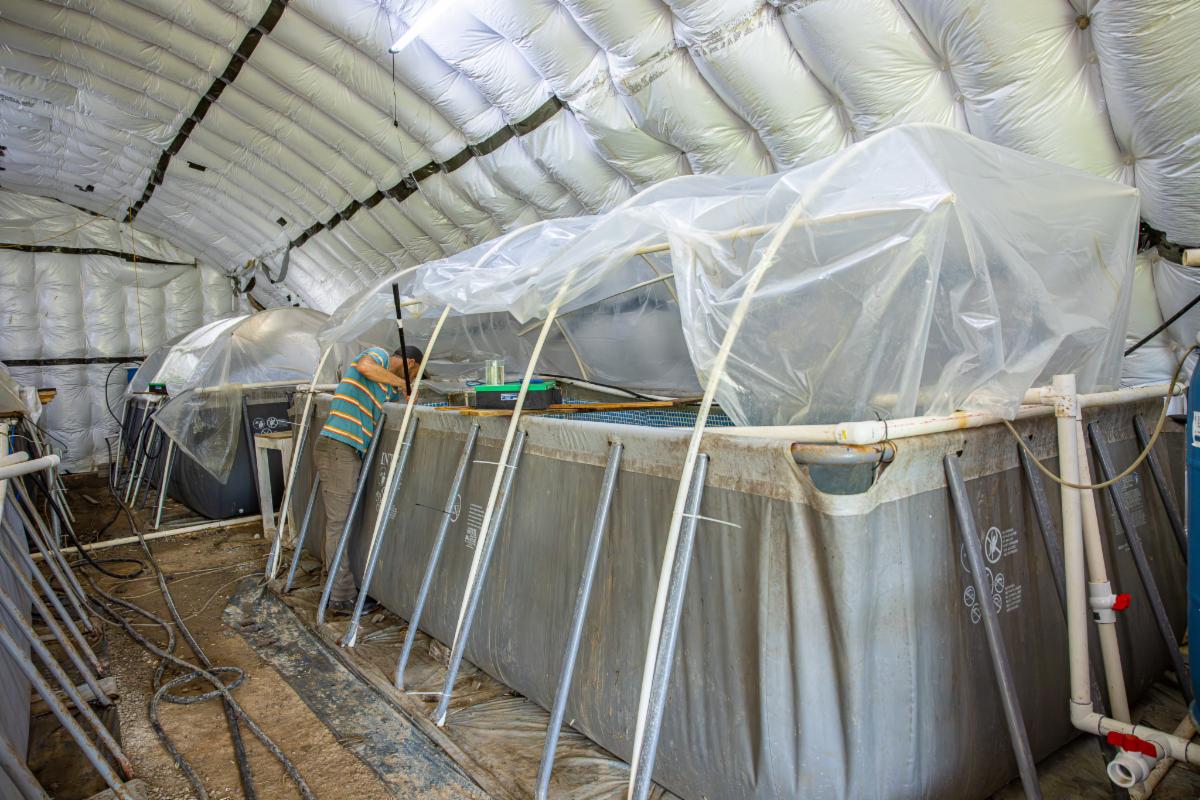
FRANKFORT, Ky. (Dec. 4, 2025) — From shrimp farming and beekeeping to maple syrup operations, small farm families across Kentucky are using modest grants to build smarter, stronger businesses that keep more Kentucky-grown products close to home.
Since 2012, Kentucky State University’s Center for Sustainability of Farms and Families has approved 1,450 on-farm projects across 115 of the Commonwealth’s 120 counties, totaling $5.06 million in direct support. The program backs practical upgrades and training in aquaculture, beekeeping, organic agriculture, agroforestry, value-added processing, food-system resiliency, and ag technology.
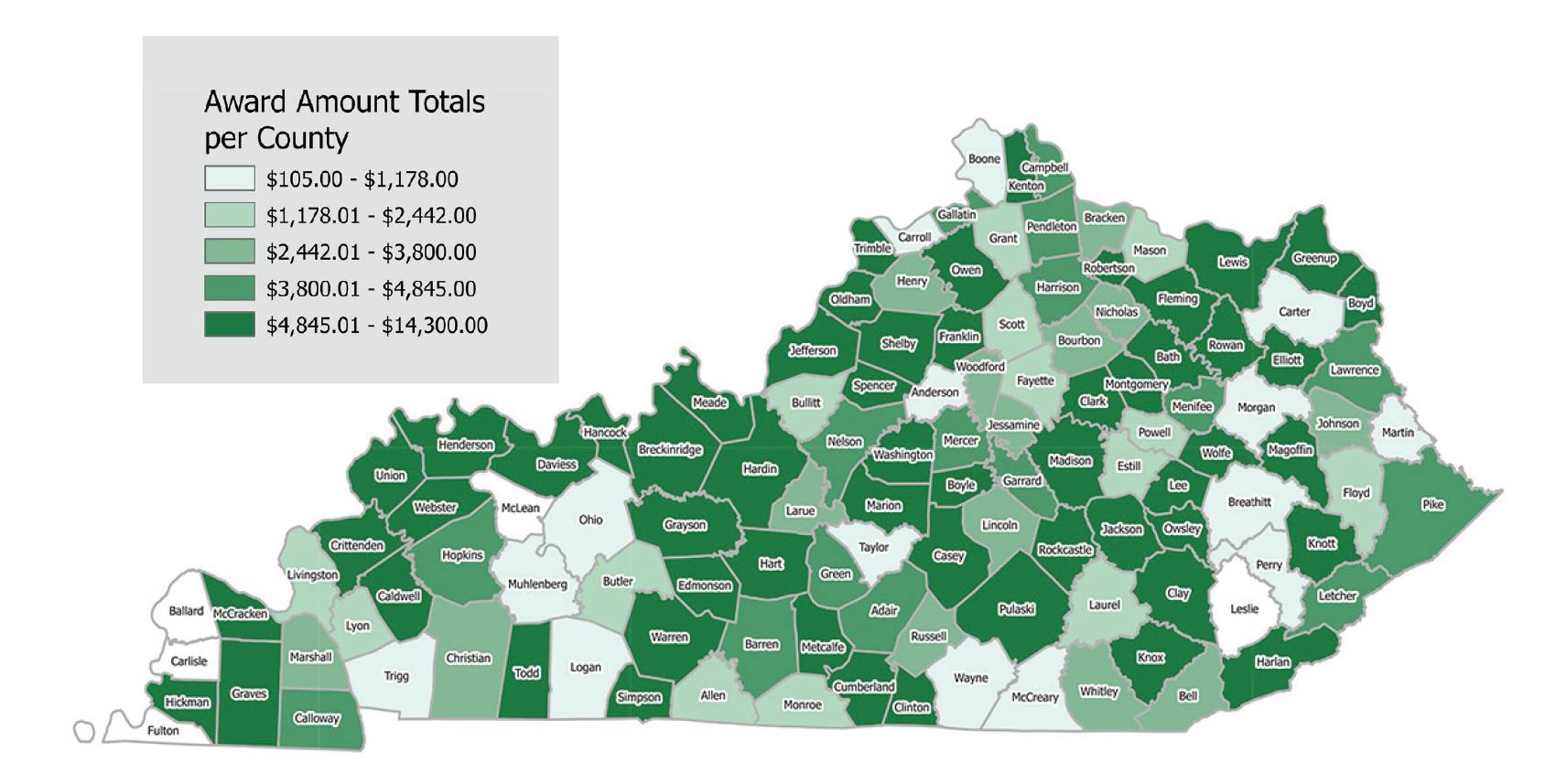
Award amount totals by county since 2012.
Building on that record, the Kentucky Agricultural Development Fund has approved an
additional $1.4 million to empower small-scale farmers—expanding education, training,
and financial support through hands-on demonstrations, outreach, and the Mini-Grants
Program.
“This program is about practical progress for small producers across the Commonwealth,”
said Joni Nelson of Kentucky State University Cooperative Extension. “The county-by-county
reach shows how Kentucky farmers are investing in smarter infrastructure, stronger
markets, and more resilient farms.”
Recent awardees include:
- Travis Cleaver — Cleaves Family Farm, Hart County
- Sarah and Vickie Crabtree — Positive Attraction Soaps, Lee County
- Maggie Dungan — Salad Days Farm, Woodford County
- Karen Fallis — Fallis Family Farm, Clark County
- Andrew Faul — Faul Family Riverside Farm, Henry County
- Reuben, Seth, and Sheryl Long — Southdown Farm, Letcher County
- Kathy Meter — Final Frontier Farm, Bourbon County
- Shon Wylie — Last Move Farm, Nicholas County
Eligibility focuses the grants where they matter most. The program is open to Kentucky
farms that sell to the public and report gross annual agricultural sales above $1,000
and below $250,000. It also serves farmers actively seeking organic certification
through the Kentucky Department of Agriculture; small-scale producers adding value
to improve marketability; and Kentucky-based nonprofits or cooperatives that serve
multiple farms, with verifiable farm lists.
Awards are up to $5,000 per application with a lifetime cap of $10,000 per farm household
or business. Applications are accepted on the first day of every other month. Funds
are issued upon contract, not as reimbursement, and guidelines prioritize durable,
on-farm improvements while excluding items such as motorized vehicles, consumables,
and labor to the applicant or relatives. Certain equipment purchases require matching
funds. A companion farmer-education mini-grant provides up to $500 for approved workshops
or conferences; lodging and mileage are eligible, while fuel and meals are not.
In addition to financial support, producers also point to the program’s knowledge-building
impact. “Being able to tailor a research project specific to my farm but useful to
all growers has been a great opportunity,” said Maggie Dungan of Salad Days Farm in
Versailles.
“Small farms are the backbone of Kentucky’s food economy,” said Dr. Marcus Bernard,
dean of the College of Agriculture, Health, and Natural Resources. “These grants deliver
immediate, on-the-ground impact—helping families modernize, expand markets, and grow
while keeping more high-quality, Kentucky-grown products on local tables.”
For deadlines and eligibility, visit https://www.kysu.edu/academics/college-ahnr/school-of-anr/co-op/small-scale-farm-grant-program.php. The Center is funded in part by the Kentucky Agricultural Development Board and
Kentucky’s tobacco settlement funds, expanding economic opportunity for limited-resource
producers statewide.